Page Menu
-
32nd Annual Conference
- 32nd Annual Conference Sessions
- 32nd Conference Program
- 32nd Annual Conference Presenter Information
- The Bertrand Russell Distinguished Scholars Critical Thinking Lecture Series
- 32nd Annual Conference Fees/ Registration
- 32nd Annual Conference Hotel
- 32nd Annual Conference Concurrent Presenters
- Visiting UC Berkeley
- 32nd Annual Conference Academic Credit
- Conference FAQs
- 32nd Conference Schedule and Brochure
-
31st INTERNATIONAL CONFERENCE
- 31st Conference Sessions
- Comments about previous conferences
- Register Now for 31st International Conference
- Conference Hotel (2011)
- Conference Presenters
- 31st Concurrent Presenters
- Academic Credit
- Visiting UC Berkeley (at the conference)
- Registration Fees
- 31st International Conference
-
30th INTERNATIONAL CONFERENCE ON CRITICAL THINKING
- 30th International Conference Theme
- 30th Conference Sessions
- PreConference Sessions
- 30th Concurrent Presenters
- 30th Conference Presuppositions
- 30th Annual Conference: Video
- Conference Hotel (2010)
- Double Tree Berkeley Hotel
- Hilton Garden Inn
- 30th International Conference
- 29th International Conference
- 29th Conference Theme
- 29th Conference Sessions
- 29th Preconference Sessions
- 29th Conference Concurrent Sessions
- 2008 Conference Sessions (28th Intl. Conference)
- 2008 Preconference Sessions (28th Intl. Conference)
- 2008 International Conference on Critical Thinking
- 2008 Conference Theme: The Art of Teaching for Intellectual Engagement
- 2007 Conference Theme and sessions
- 2007 Conference on Critical Thinking (Main Page)
- 2007 Pre-Conference Workshops
- 2006 Annual International Conference (archived)
- 2006 International Conference Sessions
- 2006 International Conference Theme
- 2006 International Pre-Conference Sessions
- 2005 Preconference (Archived)
- 2005 International Conference (archived)
- 2005 Conference Theme (archived)
- Prior Conference Programs (Pre 2000)
Translate this page from English...
*Machine translated pages not guaranteed for accuracy.
Click Here for our professional translations.

2008 Conference Theme: The Art of Teaching for Intellectual Engagement
International Conference on Critical Thinking
The Art of Teaching for Intellectual Engagement

July 21-24, 2008
Preconference: July 19-20
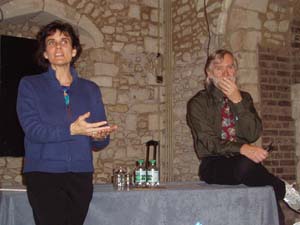
The focal point of the upcoming conference is intellectual engagement. The intellectually engaged student:
- takes ownership of content through actively thinking it through.
- values questions more than answers
- seeks understanding over rote memorization
- assesses thinking for its clarity, accuracy, precision, relevance, depth, breadth, logic, and significance
- seeks to identify key structural components in thinking(purposes, question at issue, information and data, inferences and interpretations, concepts and theories, assumptions and presuppositions, implications and consequences, points of view and frames of reference
- reads, writes, listens, and speaks critically
- questions the thinking of others and expects his or her thinking to be questioned by others
- thinks for himself while respecting and empathically entering the point of view of others
- locates ultimate intellectual authority in evidence and reasoning, rather than in authority figures or “authoritative” beliefs or texts
Under (well-designed) instruction, students learn how to analyze thinking, assess thinking, and re-construct thinking (improving it thereby). The thinking focused upon is that which is embedded in the content of established academic disciplines. As a result, students so taught become actively engaged in thinking historically, anthropologically, sociologically, politically, chemically, biologically, mathematically, …
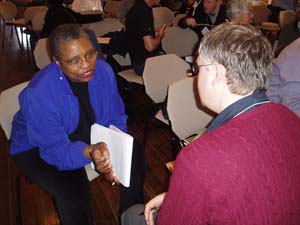
The result is that students learn to:
- raise vital questions and problems
- gather and assess important information
- come to well-reasoned conclusions and solutions
- think open-mindedly within alternative systems of thought
- communicate effectively with others
- figure out practical solutions to complex problems

Sessions at the conference will emphasize, among other things, - Teaching with a Socratic Spirit (teaching that emphasizes the student taking ownership of content through actively thinking it through). In this mode of teaching, questions take precedence over answers, while rote memorization is accorded little value.
- Teaching with intellectual standards (students routinely apply standards such as clarity, accuracy, precision, relevance, depth, breadth, logic, and significance in assessing the products of their own thinking and that of others). In this mode of teaching, intellectual discipline and rigor is expected and “less” content expressed with greater care is worth “more” than more content expressed with less care.
- Teaching that encourages students to identify key structural components in thinking (purposes, question at issue, information and data, inferences and interpretations, concepts and theories, assumptions and presuppositions, implications and consequences, points of view and frames of reference).
- Teaching that requires students to read, write, listen, and speak (critically).
- Teaching that is dialogical (The student learns to question the thinking of others and to expect his or her thinking to be questioned by others).
- Teaching that encourages students to think for themselves while exercising intellectual humility.
- Teaching that fosters intellectual autonomy, which locates ultimate intellectual authority in evidence and reasoning, rather than in authority figures or “authoritative” beliefs or texts.
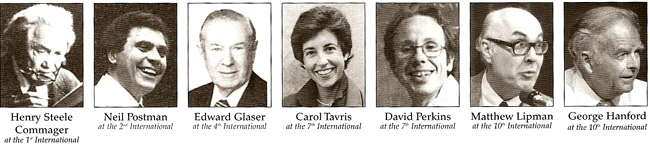
Presenters From Past Conferences


For more than a quarter century, the Foundation for Critical Thinking has emphasized and argued for the importance of teaching for critical thinking in a strong, rather than a weak, sense. We have argued for a clear and “substantive” concept of critical thinking (rather than for one that is ill-defined); for a concept that interfaces well with the disciplines, for a concept that integrates critical with creative thinking, for a concept that applies directly to the needs of everyday and professional life, for a concept that emphasizes the affective as well as the cognitive dimension of critical thinking, for a concept that highlights intellectual standards and traits, for a concept of critical thinking that enables us to organize instruction in every subject area, at every educational level, around it, and on it, and through it.
A substantive concept of critical thinking does not easily reduce to one univocal definition. Rather, it is illuminated by a range of definitions, each highlighting one of its multi-faceted dimensions: its role in intellectual analysis, evaluation, and reconstruction; its role in the array of disciplines (in historical thinking, in anthropological thinking, in sociological thinking, in artistic thinking, in scientific thinking, in the thinking of astronomers and engineers, and so forth); its role in reading, writing, and speaking; its role in investing, doing research, and self-critique; its role in transcending parochialism, egocentrism, and sociocentrism; its role in living a healthy and fit life; its role in civic life; its role in detecting media bias and propaganda; its role in non-partisan, non-ideological ethical reasoning.
One implication of such an emphasis is this: that only through long-term planning can a substantive concept of critical thinking take roots in instruction and learning. Critical thinking cannot be taught per se in any single course, or in any short-period of time. Critical thinking is the key to educational reform and deep learning, but not in any simplistic form and not in any short-term strategy. We need short-term strategies, of course. But without long-term planning nothing substantial occurs, deep learning does not result.
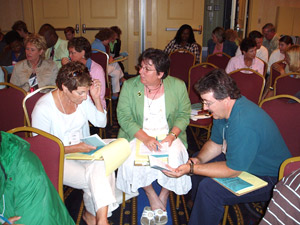
The conference will enable participants to design instruction so that students:
- Study subjects at a deeper level and from a greater variety of standpoints
- Acquire the spirit of critical enquiry
- Develop perspective across a wide variety of subjects
- Raise and discuss fundamental questions
- Weigh and assess evidence and reasoning in coming to their own conclusions
- Use and interpret relevant documents
- Relate specialized knowledge to more general issues and inquiry
- Ground their thought in relevant examples
- Discuss broad issues from a multi-disciplinary perspective
[1] The seven bullets in this section come from the article, THE OXFORD TUTORIAL: ‘Thanks, you taught me how to think’ by David Palfreyman, et.al.