
Page Menu
-
31st INTERNATIONAL CONFERENCE
- 31st Conference Sessions
- Comments about previous conferences
- Register Now for 31st International Conference
- Conference Hotel (2011)
- Conference Presenters
- 31st Concurrent Presenters
- Academic Credit
- Visiting UC Berkeley (at the conference)
- Registration Fees
- 31st International Conference
-
30th INTERNATIONAL CONFERENCE ON CRITICAL THINKING
- 30th International Conference Theme
- 30th Conference Sessions
- PreConference Sessions
- 30th Concurrent Presenters
- 30th Conference Presuppositions
- 30th Annual Conference: Video
- Conference Hotel (2010)
- Double Tree Berkeley Hotel
- Hilton Garden Inn
- 30th International Conference
- 29th International Conference
- 29th Conference Theme
- 29th Conference Sessions
- 29th Preconference Sessions
- 29th Conference Concurrent Sessions
- 2008 Conference Sessions (28th Intl. Conference)
- 2008 Preconference Sessions (28th Intl. Conference)
- 2008 International Conference on Critical Thinking
- 2008 Conference Theme: The Art of Teaching for Intellectual Engagement
- 2007 Conference Theme and sessions
- 2007 Conference on Critical Thinking (Main Page)
- 2007 Pre-Conference Workshops
- 2006 Annual International Conference (archived)
- 2006 International Conference Sessions
- 2006 International Conference Theme
- 2006 International Pre-Conference Sessions
- 2005 Preconference (Archived)
- 2005 International Conference (archived)
- 2005 Conference Theme (archived)
- Prior Conference Programs (Pre 2000)
Translate this page from English...
*Machine translated pages not guaranteed for accuracy.
Click Here for our professional translations.

29th International Conference
Conference Theme:
Fostering Intellectual Discipline
The World's Oldest Annual Conference on Critical Thinking
July 20-23, 2009
Preconference: July 18-19
at the DoubleTree Hotel and Executive
Meeting Center, Berkeley Marina, California
| CONFERENCE MENU |
|
The Center and Foundation for Critical Thinking have together hosted critical thinking academies and conferences for more than a quarter century. During that time, we have played a key role in defining, structuring, assessing, improving and advancing the principles and best practices of fair-minded critical thought in education and in society. We invite you to join us for the 28th International Conference on Critical Thinking. Our annual conference provides a unique opportunity for you to improve your understanding of critical thinking, as well as your ability to more substantively foster it in the classroom and in all aspects of your work and life.
There is no more important goal in teaching than fostering intellectual discipline.

Intellectually disciplined students:
- persevere through difficulties in problems and issues (rather than giving up when learning becomes “painful” or difficult).
- routinely empathize with the thinking of others (especially the thinking of those with whom they disagree).
- take ownership of content through actively thinking it through.
- develop confidence in their ability to figure things out for themselves.
- understand the relationship between thoughts, emotions, and desires.
- can distinguish between what they know and what they do not know (and do not confuse the two).
- articulate complex questions in multiple ways before dealing with them (to clarify them).
- use intellectual tools routinely in every class to take ownership of the content.
- seek to identify key structural components in thinking (purposes, question at issue, information and data, inferences and interpretations, concepts and theories, assumptions and presuppositions, implications and consequences, points of view and frames of reference).
- read, write, listen, and speak critically.
- locate ultimate intellectual authority in evidence and reasoning, rather than in authority figures or “authoritative” beliefs or texts.
Intellectual discipline is essential to the educated mind. However, we do not foster it at the expense of the emotional life of students. Rather we help students take command of their emotions, feelings and desires through the use of reason. We avoid teaching in such a way that students become overly self-critical, or obsessive about learning in order to make the grade or pass the test. We want students to experience the joy of learning, which they can do best when they take command of their learning and the development of their own intellect. We want them to understand the intimate relationships that exist between their feelings, emotions and desires. We want them to develop emotional intelligence, so that they learn to deal with their feelings and desires in productive and successful ways. We want them to become passionate about learning, and to learn the skills necessary for honestly confronting the day to day problems inherent in learning at a deep level.
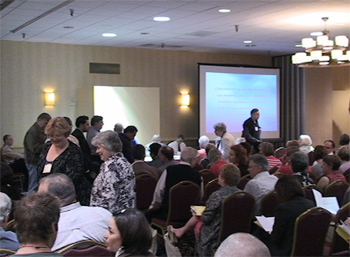
The conference will consist in approximately 40 conference sessions offered over four days. Participants will choose in advance the sessions offered on days one and two, day three - afternoon, and day four - morning. At the conference, participants will choose from a number of concurrent sessions offered on the third morning of the conference. We invite both new and returning participants to join us for the preconference, to be held July 18-19, 2008.
All conference sessions will be designed to converge on basic critical thinking principles and to enrich a core concept of critical thinking with practical teaching and learning strategies. For a fuller explanation of core critical thinking concepts review the Thinker's Guide Series or articles from our library.
Throughout our work we emphasize and argue for the importance of teaching for critical thinking in a strong, rather than a weak, sense. We are committed to a clear and "substantive" concept of critical thinking (rather than one that is ill-defined); a concept that interfaces well with the disciplines, that integrates critical with creative thinking, that applies directly to the needs of everyday and professional life, that emphasizes the affective as well as the cognitive dimension of critical thinking, that highlights intellectual standards and traits. We advocate a concept of critical thinking that organizes instruction in every subject area at every educational level.
Here is a draft program (sessions will be finalized presently):
PRECONFERENCE SESSIONS
(participants will choose one of the following sessions)…

- Imagining New Ways to Live: The Art of Thinking Critically…Linda Elder
- Teaching Students Essential and Powerful Concepts…Gerald Nosich
- Exploring the Relationship Between Content and Thinking in Fostering Intellectual Discipline… Richard Paul
- Placing Critical Thinking at the Heart of High School Instruction…Enoch Hale
CONFERENCE SESSIONS
DAY ONE:
(participants will choose one of the following sessions)…
- The Role Of Self-Reflection And Self-Assessment In Disciplining The Mind…Gerald Nosich
- Fostering Socratic Critical Thinking (While Minimizing Sophistic Critical Thinking)…Richard Paul
- Deep And Surface Learning: Why Students Get Trapped On The Surface; How To Facilitate Deeper Learning… Rush Cosgrove
- Meeting, Facing And Overcoming Barriers To Disciplining The Mind…Linda Elder
- Fostering Close Reading And Substantive Writing Through Critical Thinking…Enoch Hale
DAY TWO MORNING:
(participants will choose one of the following sessions)…
- Using The Concepts And Principles Of Critical Thinking To Guide Instruction…Richard Paul
- The Role of Testing and Assessment in Fostering Intellectual Discipline…Gerald Nosich
- Using Peer Assessment To Foster Deep Learning…Linda Elder
- Global And Specialized Approaches To Critical Thinking…Enoch Hale
- How Great Thinkers Have Learned How To Learn (And What Our Students Can Learn From Them) …Rush Cosgrove
DAY TWO AFTERNOON:
(participants will choose one of the following sessions)…
- The Role Of Administration In Creating Critical Thinking Communities…Linda Elder
- Teaching Students To Formulate And Reason Through Essential Questions Within The Disciplines… Gerald Nosich
- Using Internet Resources To Develop And Foster Critical Thinking…Rush Cosgrove
- Using The Critical Thinking Basic Concepts And Understandings Test And Other Critical Thinking Assessment Tools…Enoch Hale
- Fostering Activated Knowledge: Taking Students Beyond Inert Information And Activated Ignorance…Richard Paul
- Elementary Session…Thompson School District, Colorado
DAY THREE MORNING
(participants will choose from among 20+ one-hour concurrent sessions at the conference)
DAY THREE AFTERNOON
(participants will choose one of the following sessions)…
- Critical Thinking and Human Emotions: Exploring the Role of Critical Thinking In Taking Command of One’s Emotional Life…Linda Elder
- Teaching Students To Think Multilogically As They Reason Through Issues Within Subjects And Disciplines…Gerald Nosich
- Emancipating The Mind Through Critical Thinking…Richard Paul
- The Paulian Conception Of Critical Thinking: Global, Integrated, Explicit, Systematic…Enoch Hale
- Keeping Newman’s Ideas Relevant In The 21st Century…Rush Cosgrove
DAY FOUR MORNING
(participants will choose one of the following sessions)…
- Overcoming The Barriers To Disciplining The Mind: Bad Habits Of Teaching And Learning…Gerald Nosich
- Improving Student Learning: Teaching Students How To Study And Learn…Enoch Hale
- Transforming Everyday Experience Through Critical Thinking …Rush Cosgrove
- Issues in Critical Thinking…Richard Paul
- Are Critical Societies Possible?...Linda Elder