Page Menu
- Home
-
Begin Here
- College and University Faculty
- College and University Students
- High School Teachers
- Junior High School Teachers (6-9)
- Elementary Educators (4-6)
- Elementary Educators (K-3)
- Science and Engineering
- Professional and Personal Development
- Nursing and Health Care
- Home School (Grades K-12)
- Learn the Elements and Standards
- Bookstore
-
About Us
- International Center for the Assessment of Higher Order Thinking
- Our Mission
- Our Team of Presenters
- Fellows of the Foundation
- Dr. Richard Paul
- Dr. Linda Elder
- Dr. Gerald Nosich
- Mr. Rush Cosgrove
- Fellows of the Foundation
- Permission to Use Our Work
- The Critical Thinking Community
- Contributions to the Foundation for Critical Thinking
- Contact Us - Office Information
- Testimonials
- Site Map
- Center for Critical Thinking
- The National Council for Excellence in Critical Thinking
-
Articles
- About Critical Thinking
- Defining Critical Thinking
- A Brief History of the Idea of Critical Thinking
- Critical Thinking: Basic Questions & Answers
- Defining Critical Thinking
- Our Concept and Definition of Critical Thinking
- Sumner’s Definition of Critical Thinking
- Research in Critical Thinking
- Quotable Quotes
- Critical Societies: Thoughts from the Past
- Fundamentals of Critical Thinking
- Content Is Thinking, Thinking is Content
- Critical Thinking in Every Domain of Knowledge and Belief
- Using Intellectual Standards to Assess Student Reasoning
- Open-minded inquiry
- Valuable Intellectual Traits
- Universal Intellectual Standards
- Thinking With Concepts
- The Role of Questions in Teaching, Thinking and Learning
- The Analysis & Assessment of Thinking
- Glossary of Critical Thinking Terms
- Distinguishing Between Inert Information, Activated Ignorance, Activated Knowledge
- Critical Thinking: Identifying the Targets
- Distinguishing Between Inferences and Assumptions
- Critical Thinking Development: A Stage Theory
- Becoming a Critic Of Your Thinking
- Bertrand Russell on Critical Thinking
- Richard Paul Anthology Classic
- Higher Education Instruction
- An Overview of How to Design Instruction Using Critical Thinking Concepts
- Recommendations for Departmental Self-Evaluation
- College-Wide Grading Standards
- Sample Course: American History: 1600 to 1800
- CT Class Syllabus
- Syllabus - Psychology I
- A Sample Assignment Format
- Grade Profiles
- Critical Thinking Class: Student Understandings
- Structures for Student Self-Assessment
- Critical Thinking Class: Grading Policies
- Socratic Teaching
- John Stuart Mill: On Instruction, Intellectual Development, and Disciplined Learning
- Critical Thinking and Nursing
- Documenting the Problem
- Intellectual Foundations: The Key Missing Piece in School Restructuring
- Pseudo Critical Thinking in the Educational Establishment
- Research Findings and Policy Recommendations
- Why Students and Teachers Don’t Reason Well
- Critical Thinking in the Engineering Enterprise: Novices typically don't even know what questions to ask
- Critical Thinking Movement: 3 Waves
- K-12 Instruction Strategies & Samples
- Tactical and Structural Recommendations
- Teaching Tactics that Encourage Active Learning
- Using Intellectual Standards to Assess Student Reasoning
- The Art of Redesigning Instruction
- Children's Guide Video Series (K-6)
- Making Critical Thinking Intuitive
- Remodelled Lessons: K-3
- Remodelled Lessons: 4-6
- Remodelled Lessons: 6-9
- Remodelled Lessons: High School
- Strategy List: 35 Dimensions of Critical Thought
- Socratic Teaching
- John Stuart Mill: On Instruction, Intellectual Development, and Disciplined Learning
- Introduction to Remodelling: Components of Remodels and Their Functions
- For Students
- Critical Thinking in Everyday Life: 9 Strategies
- Developing as Rational Persons: Viewing Our Development in Stages
- How to Study and Learn (Part One)
- How to Study and Learn (Part Two)
- How to Study and Learn (Part Three)
- How to Study and Learn (Part Four)
- The Art of Close Reading (Part One)
- The Art of Close Reading (Part Two)
- The Art of Close Reading (Part Three)
- Looking To The Future With a Critical Eye: A Message for High School Graduates
- Becoming a Critic Of Your Thinking
- For Young Students (Elementary/K-6)
- Issues in Critical Thinking
- Critical Thinking and the Social Studies Teacher
- Ethical Reasoning Essential to Education
- Ethics Without Indoctrination
- Engineering Reasoning
- Accelerating Change
- Applied Disciplines: A Critical Thinking Model for Engineering
- Global Change: Why C.T. is Essential To the Community College Mission
- Natural Egocentric Dispositions
- Diversity: Making Sense of It Through Critical Thinking
- Critical Thinking, Moral Integrity and Citizenship
- Critical Thinking and Emotional Intelligence
- The Questioning Mind
- Newton, Darwin, & Einstein
- The Role of Socratic Questioning in Thinking, Teaching, & Learning
- The Critical Mind is A Questioning Mind
- Three Categories of Questions: Crucial Distinctions
- The Role of Questions in Teaching, Thinking and Learning
- A History of Freedom of Thought
- Reading Backwards: Classic Books Online
-
Professional Development
- Institutions Using Our Approach to Critical Thinking
- Recent Professional Development Programs
- K-12 Instruction
- Higher Education
- Business & Professional Groups
- Online Courses for Instructors
- The State of Critical Thinking Today
- Professional Development Model for K-12
- Professional Development Model - College and University
- Workshop Descriptions
- Mentor Program
- Inservice Information Request Form
-
Research
- Effect of a Model for Critical Thinking on Student Achievement...
- The Effect of Richard Paul's Universal Elements and Standards of Reasoning on Twelfth Grade Composition
- Study of 38 Public Universities and 28 Private Universities To Determine Faculty Emphasis on Critical Thinking In Instruction
- Substantive Critical Thinking as Developed by the Foundation for Critical Thinking Proves Effective in Raising SAT and ACT Test Scores...
- Teaching Critical Thinking Skills to Fourth Grade Students Identified as Gifted and Talented
- Critical Thinking in the Oxford Tutorial Abstract
- Critical Thinking Instruction in Greater Los Angeles Area High Schools
- Critical Thinking: Lessons from a Continuing Professional Development Initiative in a London Comprehensive Secondary School
-
Conference/Events
- 33rd International Conference
- 33rd International Conference Sessions
- 33rd International Conference Presenters
- The Bertrand Russell Distinguished Scholars Critical Thinking Conversations
- 33rd International Conference Concurrent Presenters
- 33rd International Conference - Fees & Registration
- 33rd International Conference - Hotel Information
- Visiting UC Berkeley
- 33rd International Conference - Academic Credit Information
- 33rd International Conference Flyer
- 33rd International Conference - Schedule
- Conference FAQs
- Calendar of Events
- WORKSHOP ARCHIVES
- Spring Workshop 2012
- 2012 Spring Workshop Strands
- 2012 Spring Workshop Flier
- Team of Presenters
- 2011 Spring Workshop
- 2011 Spring Workshop Hotel Info
- Spring 2010 Workshop Strands
- 2009 Spring Workshops on Critical Thinking
- 2008 SPRING Workshops and Seminars on Critical Thinking
- 2008 Ethical Reasoning Workshop
- 2008 - On Richard Paul's Teaching Design
- 2008 Engineering Reasoning Workshop
- 2008 Academia sobre Formulando Preguntas Esenciales
- 2007 National Academy on Critical Thinking Testing and Assessment
- ACADEMY ARCHIVES
- 2nd International Academy on Critical Thinking (Oxford 2008)
- 2006 Cambridge Academy Daily Schedule
- 2006 Cambridge Academy (archived)
- 2006 Cambridge Academy Theme
- 2006 Cambridge Academy Sessions
- Accommodations at St. John's College
- 2006 Cambridge Academy (archived)
- Directions to New College, Oxford
- CONFERENCE ARCHIVES
- 32nd Annual Conference
- 32nd Annual Conference Sessions
- 32nd Conference Program
- 32nd Annual Conference Presenter Information
- The Bertrand Russell Distinguished Scholars Critical Thinking Lecture Series
- 32nd Annual Conference Fees/ Registration
- 32nd Annual Conference Hotel
- 32nd Annual Conference Concurrent Presenters
- Visiting UC Berkeley
- 32nd Annual Conference Academic Credit
- Conference FAQs
- 32nd Conference Schedule and Brochure
- 31st INTERNATIONAL CONFERENCE
- 31st Conference Sessions
- Comments about previous conferences
- Register Now for 31st International Conference
- Conference Hotel (2011)
- Conference Presenters
- 31st Concurrent Presenters
- Academic Credit
- Visiting UC Berkeley (at the conference)
- Registration Fees
- 31st International Conference
- 30th INTERNATIONAL CONFERENCE ON CRITICAL THINKING
- 30th International Conference Theme
- 30th Conference Sessions
- PreConference Sessions
- 30th Concurrent Presenters
- 30th Conference Presuppositions
- 30th Annual Conference: Video
- Conference Hotel (2010)
- Double Tree Berkeley Hotel
- Hilton Garden Inn
- 30th International Conference
- 29th International Conference
- 29th Conference Theme
- 29th Conference Sessions
- 29th Preconference Sessions
- 29th Conference Concurrent Sessions
- 2008 Conference Sessions (28th Intl. Conference)
- 2008 Preconference Sessions (28th Intl. Conference)
- 2008 International Conference on Critical Thinking
- 2008 Conference Theme: The Art of Teaching for Intellectual Engagement
- 2007 Conference Theme and sessions
- 2007 Conference on Critical Thinking (Main Page)
- 2007 Pre-Conference Workshops
- 2006 Annual International Conference (archived)
- 2006 International Conference Sessions
- 2006 International Conference Theme
- 2006 International Pre-Conference Sessions
- 2005 Preconference (Archived)
- 2005 International Conference (archived)
- 2005 Conference Theme (archived)
- Prior Conference Programs (Pre 2000)
-
Assessment & Testing
- A Model for the National Assessment of Higher Order Thinking
- International Critical Thinking Test
- Online Critical Thinking Basic Concepts Test
- Consequential Validity: Using Assessment to Drive Instruction
-
News
- News Stories that Critique Social and Institutional Practices
- Newest pages and articles added to www.criticalthinking.org
- INTERVIEWS & EDITORIALS
- An Interview with Linda Elder About Using Critical Thinking Concepts and Tools
- An Interview with Linda Elder: About Critical Thinking and Gifted Education
- Editorials: Race to the Top of the bottom: a Failure of Insight
- Editorials: The Practical Impractical (k-12)
- Editorials: Re-thinking the SAT: Rhetoric or Substance?
- Editorials: Collaborative Learning: Collaborative Mislearning
- Editorials: The New Standards: The Case for Intellectual Discipline in the Classroom
- NEWS ARCHIVES
- December 2012
- July 2011
- June 2011
- May 2011
- April 2011
- March 2011
- February 2011
- January 2011
- December 2010
- November 2010
- October 2010
- September 2010
- August 2010
- July 2010
- June 2010
- May 2010
- April 2010
- March 2010
- February 2010
- January 2010
- December 2009
- November 2009
- October 2009
- September 2009
- August 2009
- July 2009
- June 2009
- May 2009
- April 2009
- March 2009
- February 2009
- January 2009
- December 2008
- November 2008
- October 2008
- September 2008
- August 2008
- July 2008
- June 2008
- May 2008
- April 2008 News
- March 2008
- February 2008
- January 2008
- December 2007
- November 2007
- October 2007
- September 2007
- August 2007
- July 2007 News
- June 2007 News
- May 2007 News
- April 2007 News
- March 2007 News
- 2007 Archive of News on Critical Societies
- 2008 Archive of News on Critical Societies
- PRESS RELEASES
- 3-12-2009: The Pressing Need for Critical Thinking
- 12-11-2007: Workshop on The Art of Making Intelligent Decisions with Dr. Gerald Nosich
- 12-04-2007: Workshop on Engineering Reasoning with Dr. Rob Niewoehner
- Press Photos for Pickup
- 11-08-2007: Hispanic Academy on Asking Essential Questions with Sr Rush Cosgrove
- 11-06-2007: Workshop on Fostering Ethical Reasoning Across the Curriculum with Dr Linda Elder
- 11-06-2007: Workshop on Richard Paul's Teaching Design with Dr Richard Paul
- 11-06-2007: International Academy at Oxford - Leveraging the Oxford Tutorial
- 10-01-2007: The 2007 National Academy on Testing and Assessment Report
- NEWSLETTER ARCHIVES
- November 2011 Newsletter
- October 2011 Newsletter
- August 2011 Newsletter
- June 2011 Newsletter
- May 2011 Newsletter
- April 2011 Newsletter
- November 2010 Newsletter
- September 2010 Newletter
- August 2010 Newsletter
- July 2010 Newsletter
- June 2010 Newsletter
- May 2010 Newsletter
- April 2010 Newsletter
- March 2010 Newsletter
- February 2010 Newsletter
- January 2010 Newsletter
- December 2009 Newsletter
- November 2009 Newsletter
- October 2009 Newsletter
- September 2009 Newsletter
- August 2009 Newsletter
- July 2009 Newsletter
- June 2009 Newsletter
- May 2009 Newsletter
- April 2009 Newsletter
- January 2009 Newsletter
- November 2008 Newsletter
-
Online Learning
- Critical Thinking Online Course
- The Critical Thinking Community Online
- Critical Thinking Basic Concepts ONLINE Test
- Elements and Standards Learning Tool
- Critical Thinking Channel on YouTube
Translate this page from English...
*Machine translated pages not guaranteed for accuracy.
Click Here for our professional translations.
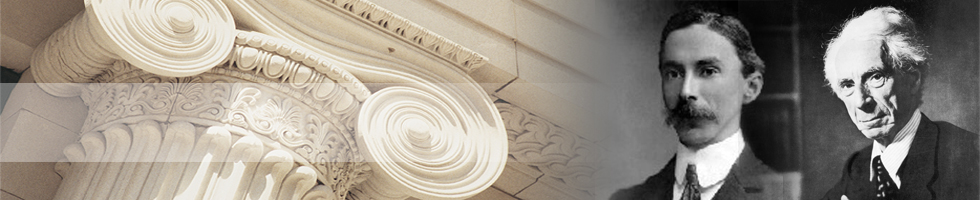
The Bertrand Russell Distinguished Scholars Critical Thinking Lecture Series
At this year’s conference we introduce the Bertrand Russell Distinguished Scholars Critical Thinking Lecture Series. This new feature of the conference will highlight the work and thinking of distinguished thinkers within subjects, fields, disciplines or about specific topics or issues. We honor the thinking, the philosophy and the contribution of Bertrand Russell through this lecture series.
Bertrand Russell was one of the most influential 20th century philosophers. In the following passages, he emphasizes the importance of open and free inquiry. He stresses the critical need to create education systems that foster fairminded pursuit of knowledge and warns of the dangers inherent in dogmatic ideologies.
The conviction that it is important to believe this or that, even if a free inquiry would not support the belief, is one which is common to almost all religions and which inspires all systems of state education...A habit of basing convictions upon evidence, and of giving to them only that degree of certainty which the evidence warrants, would, if it became general, cure most of the ills from which the world is suffering. But at present, in most countries, education aims at preventing the growth of such a habit, and men who refuse to profess belief in some system of unfounded dogmas are not considered suitable as teachers of the young…
The world that I should wish to see would be one freed from the virulence of group hostilities and capable of realizing that happiness for all is to be derived rather from cooperation than from strife. I should wish to see a world in which education aimed at mental freedom rather than at imprisoning the minds of the young in a rigid armor of dogma calculated to protect them through life against the shafts of impartial evidence. The world needs open hearts and open minds, and it is not through rigid systems, whether old or new, that these can be derived (Russell, 1957, pp. vi-vii).
In his book, Portraits from Memory , "Reflections on My Eightieth Birthday," Russell (1956) comments on the long-term nature of change and the importance of moving ever closer toward the creation of critical societies:
...beneath all this load of failure I am still conscious of something that I feel to be victory. I may have conceived theoretical truth wrongly, but I was not wrong in thinking that there is such a thing, and that it deserves our allegiance. I may have thought the road to a world of free and happy human beings shorter than it is proving to be, but I was not wrong in thinking that such a world is possible, and that it is worthwhile to live with a view to bringing it nearer. I have lived in the pursuit of a vision, both personal and social. Personal: to care for what is noble, for what is beautiful, for what is gentle; to allow moments of insight to give wisdom at more mundane times. Social: to see in imagination the society that is to be created, where individuals grow freely, and where hate and greed and envy die because there is nothing to nourish them. These things I believe, and the world, for all its horrors, has left me unshaken.
Russell (1919) also illuminates the fact that the vast majority of people today do not think critically, or indeed ethically, and that those who do will seek a "new system of society." He says:
The great majority of men and women, in ordinary times, pass through life without ever contemplating or criticising, as a whole, either their own conditions or those of the world at large. They find themselves born into a certain place in society, and they accept what each day brings forth, without any effort of thought beyond what the immediate present requires…they seek the satisfaction of the needs of the moment, without much forethought, and without considering that by sufficient effort the whole condition of their lives could be changed...It is only a few rare and exceptional men who have that kind of love toward mankind at large that makes them unable to endure patiently the general mass of evil and suffering, regardless of any relation it may have to their own lives. These few, driven by sympathetic pain, will seek, first in thought and then in action, for some way of escape, some new system of society by which life may become richer, more full of joy and less full of preventable evils than it is at present (p. viii).
Bertrand Russell’s thoughts and writings on social issues are intimately linked with the ideals of critical thinking and the concept of fairminded critical societies.
References:
Russell, B. (1919). Proposed Roads to Freedom . NY: Henry Holt and Co.
Russell, B. (1956). Portraits From Memory and Other Essays . New York: Simon and Schuster.
Russell, B. (1957). Why I am Not a Christian . New York: Simon and Schuster.
For some of Russell’s views, in his own voice, click on the following video links:
On how we should live today…
on the three passions of Bertrand Russell…
To read some of Russell’s work, click on these downloadable books:
| • The Practice and Theory of Bolshevism • How Bertrand Russell was Prevented from Teaching at the College of the City of New York | |
|