Page Menu
-
About Critical Thinking
- Defining Critical Thinking
- A Brief History of the Idea of Critical Thinking
- Critical Thinking: Basic Questions & Answers
- Defining Critical Thinking
- Our Concept and Definition of Critical Thinking
- Sumner’s Definition of Critical Thinking
- Research in Critical Thinking
- Quotable Quotes
- Critical Societies: Thoughts from the Past
-
Fundamentals of Critical Thinking
- Content Is Thinking, Thinking is Content
- Critical Thinking in Every Domain of Knowledge and Belief
- Using Intellectual Standards to Assess Student Reasoning
- Open-minded inquiry
- Valuable Intellectual Traits
- Universal Intellectual Standards
- Thinking With Concepts
- The Role of Questions in Teaching, Thinking and Learning
- The Analysis & Assessment of Thinking
- Glossary of Critical Thinking Terms
- Distinguishing Between Inert Information, Activated Ignorance, Activated Knowledge
- Critical Thinking: Identifying the Targets
- Distinguishing Between Inferences and Assumptions
- Critical Thinking Development: A Stage Theory
- Becoming a Critic Of Your Thinking
- Bertrand Russell on Critical Thinking
- Richard Paul Anthology Classic
-
Higher Education Instruction
- An Overview of How to Design Instruction Using Critical Thinking Concepts
- Recommendations for Departmental Self-Evaluation
- College-Wide Grading Standards
- Sample Course: American History: 1600 to 1800
- CT Class Syllabus
- Syllabus - Psychology I
- A Sample Assignment Format
- Grade Profiles
- Critical Thinking Class: Student Understandings
- Structures for Student Self-Assessment
- Critical Thinking Class: Grading Policies
- Socratic Teaching
- John Stuart Mill: On Instruction, Intellectual Development, and Disciplined Learning
- Critical Thinking and Nursing
-
Documenting the Problem
- Intellectual Foundations: The Key Missing Piece in School Restructuring
- Pseudo Critical Thinking in the Educational Establishment
- Research Findings and Policy Recommendations
- Why Students and Teachers Don’t Reason Well
- Critical Thinking in the Engineering Enterprise: Novices typically don't even know what questions to ask
- Critical Thinking Movement: 3 Waves
-
K-12 Instruction Strategies & Samples
- Tactical and Structural Recommendations
- Teaching Tactics that Encourage Active Learning
- Using Intellectual Standards to Assess Student Reasoning
- The Art of Redesigning Instruction
- Children's Guide Video Series (K-6)
- Making Critical Thinking Intuitive
- Remodelled Lessons: K-3
- Remodelled Lessons: 4-6
- Remodelled Lessons: 6-9
- Remodelled Lessons: High School
- Strategy List: 35 Dimensions of Critical Thought
- Socratic Teaching
- John Stuart Mill: On Instruction, Intellectual Development, and Disciplined Learning
- Introduction to Remodelling: Components of Remodels and Their Functions
-
For Students
- Critical Thinking in Everyday Life: 9 Strategies
- Developing as Rational Persons: Viewing Our Development in Stages
- How to Study and Learn (Part One)
- How to Study and Learn (Part Two)
- How to Study and Learn (Part Three)
- How to Study and Learn (Part Four)
- The Art of Close Reading (Part One)
- The Art of Close Reading (Part Two)
- The Art of Close Reading (Part Three)
- Looking To The Future With a Critical Eye: A Message for High School Graduates
- Becoming a Critic Of Your Thinking
- For Young Students (Elementary/K-6)
-
Issues in Critical Thinking
- Critical Thinking and the Social Studies Teacher
- Ethical Reasoning Essential to Education
- Ethics Without Indoctrination
- Engineering Reasoning
- Accelerating Change
- Applied Disciplines: A Critical Thinking Model for Engineering
- Global Change: Why C.T. is Essential To the Community College Mission
- Natural Egocentric Dispositions
- Diversity: Making Sense of It Through Critical Thinking
- Critical Thinking, Moral Integrity and Citizenship
- Critical Thinking and Emotional Intelligence
-
The Questioning Mind
- Newton, Darwin, & Einstein
- The Role of Socratic Questioning in Thinking, Teaching, & Learning
- The Critical Mind is A Questioning Mind
- Three Categories of Questions: Crucial Distinctions
- The Role of Questions in Teaching, Thinking and Learning
- A History of Freedom of Thought
- Reading Backwards: Classic Books Online
Translate this page from English...
*Machine translated pages not guaranteed for accuracy.
Click Here for our professional translations.
Reading Backwards
“If we encountered a man of rare intelligence we should ask him what books he read.”

When you do so, you can step outside the presuppositions and ideologies of the present day and develop an informed world perspective.
When you read only in the present, no matter how extensively, you are apt to absorb widely shared misconceptions taught and believed today as the truth. The following is a sampling of authors whose writings will enable you to rethink the present, to reshape and expand your worldview.
Insightful Authors Through the Ages -
When you read backwards, you will come to understand some of the stereotypes and misconceptions of the present. You will develop a better sense of what is universal and what is relative, what is essential and what is arbitrary.
Note: We recognize that this list of authors represents a decidedly Western worldview. We therefore recommend, once you have grounded yourself in deeply insightful authors from the Western world, that you then read works by the great Eastern authors.
Here are some authors we recommend:
- More than 2,000 years ago: Plato, Aristotle, Aeschylus, Aristophanes
- 1200s: Thomas Aquinas, Dante
- 1300s: Boccaccio, Chaucer
- 1400s: Erasmus, Francis Bacon
- 1500s: Machiavelli, Cellini, Cervantès, Montaigne
- 1600s: John Milton, Pascal, John Dryden, John Locke, Joseph Addison
- 1700s: Thomas Paine, Thomas Jefferson, Adam Smith, Benjamin Franklin, Alexander Pope, Edmund Burke, Edward Gibbon, Samuel Johnson, Goethe, Rousseau, William Blake
- 1800s: Jane Austen, Charles Dickens, Emile Zola, Balzac, Dostoyevsky, Sigmund Freud, Karl Marx, Charles Darwin, John Henry Newman, John Stuart Mill, Leo Tolstoy, the Brontes, Frank Norris, Thomas Hardy, Emile Durkheim, Edmond Rostand, Oscar Wilde
- 1900s: Ambrose Bierce, Gustavus Myers, H.L. Mencken, William Graham Sumner, W.H. Auden, Bertolt Brecht, Joseph Conrad, Max Weber, Aldous Huxley, Franz Kafka, Sinclair Lewis, Henry James, Jean-Paul Sartre, Virginia Woolf, William Appleman Williams, Arnold Toynbee, C. Wright Mills, Albert Camus, Willa Cather, Bertrand Russell, Karl Mannheim, Thomas Mann, Albert Einstein, Simone De Beauvoir, Winston Churchill, William J. Lederer, Vance Packard, Eric Hoffer, Erving Goffman, Philip Agee, John Steinbeck, Ludwig Wittgenstein, William Faulkner, Talcott Parsons, Jean Piaget, Lester Thurow, Robert Reich, Robert Heilbroner, Noam Chomsky, Jacques Barzun, Ralph Nader, Margaret Mead, Bronislaw Malinowski, Karl Popper, Robert Merton, Peter Berger, Milton Friedman, J. Bronowski
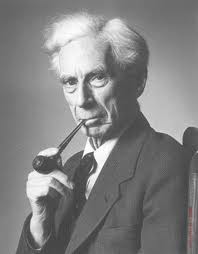
Russell, Bertrand Arthur William 3rd, 1872-1970
- The Problem of China
- The Problem of Philosophy
- Proposed Roads to Freedom
- How Bertrand Russel was Prevented from Teaching at the College of the City of New York
- Bertrand Russell: To our Descendants (Video)


- Folkways
- A Study of the Sociological Importance of Usages, Manners, Customs, Mores, and Morals(English)
- The Communist Manifesto (English)
- Selected Essays (English)


- Auguste Comte and Positivism (English)
- Autobiography (English)
- Considerations on Representative Government (English)
- The Contest in America (English)
- Essays on some unsettled Questions of Political Economy(English)
- Utilitarianism (English)

- Emma (English)
- Mansfield Park (English)
- Northanger Abbey (English)
- Persuasion (English)
- Pride and Prejudice (English)
- Sense and Sensibility (English)

- Common Sense (English)
- Writings of Thomas Paine — Volume 1 (1774-1779): the American Crisis
- Writings of Thomas Paine — Volume 2 (1779-1792): the Rights of Man
- Writings of Thomas Paine — Volume 4 (1794-1796): the Age of Reason


- The Apology (English)
- The Memorabilia (English)
- The Memorable Thoughts of Socrates (English)

- Apology (English)
- Euthyphro (English)
- Meno (English)
- The Republic (English)
- Sophist (English)